.jpg)
What Is ROI in Healthcare? How to Measure Marketing Performance and Drive Growth
Read More





Voice technology is no longer limited to basic phone menus or novelty assistants. As artificial intelligence continues to advance, organizations across industries are rethinking how they manage conversations, deliver information, and support users at scale. At the center of this shift is a critical concept many leaders are evaluating: what is AI voice, and how does it translate into real operational value?
AI Voice technology enables organizations to automate conversations, respond intelligently, and deliver consistent experiences without increasing administrative burden. As accuracy, natural language understanding, and conversational intelligence improve, AI Voice is moving from experimentation to implementation, particularly in environments where speed, accessibility, and efficiency matter most.
This article explains how AI Voice works, how it’s being used today, and why it is becoming a core communication tool for modern organizations, including healthcare and B2B services.
At its core, AI voice refers to technology that allows machines to understand spoken language and respond with natural-sounding speech. Unlike traditional automated systems, AI Voice does not rely on rigid scripts alone. Instead, it interprets intent, context, and conversational flow.
Modern AI Voice systems are built on several interconnected components:
Together, these elements enable AI Voice systems to answer questions, guide users through tasks, collect structured information, and manage conversations without human intervention.
AI voice technology allows organizations to scale communication efficiently while maintaining consistency and availability. Instead of requiring human agents to handle every interaction, AI Voice systems manage routine or high-volume conversations automatically.
Common applications include:
As conversational intelligence improves, AI Voice systems are increasingly capable of handling nuanced interactions, making them suitable for both customer-facing and internal use cases.
Early voice systems were limited by rigid logic and robotic sound. Today’s synthetic voice solutions are designed to feel natural, clear, and approachable, reducing friction for users and increasing trust.
Advances in voice modeling now allow AI systems to:
These improvements have elevated AI Voice from a basic automation tool to a conversational interface that users are comfortable engaging with in real-world scenarios.
Artificial intelligence voice systems are being adopted by organizations that rely on fast, accurate communication. In customer service environments, AI Voice reduces wait times and supports 24/7 availability. In marketing and sales, it assists with lead qualification and outbound engagement. Internally, it helps manage scheduling, alerts, and task coordination.
Rather than replacing human teams, AI Voice acts as a scalable extension, handling repetitive interactions so staff can focus on complex, high-value work.
Healthcare organizations face constant communication demands, from appointment requests to patient questions and follow-ups. AI Voice offers immediate value by reducing administrative pressure while improving responsiveness.
In healthcare settings, AI Voice can:
Consistency and clarity are essential in regulated environments. When implemented thoughtfully, AI Voice helps healthcare organizations maintain standardized messaging while improving access and efficiency.
For organizations exploring conversational automation beyond voice alone, integrated solutions such as North Vista’s AI chatbot services demonstrate how conversational AI can support both voice and text interactions across websites, messaging platforms, and phone systems within a unified framework.
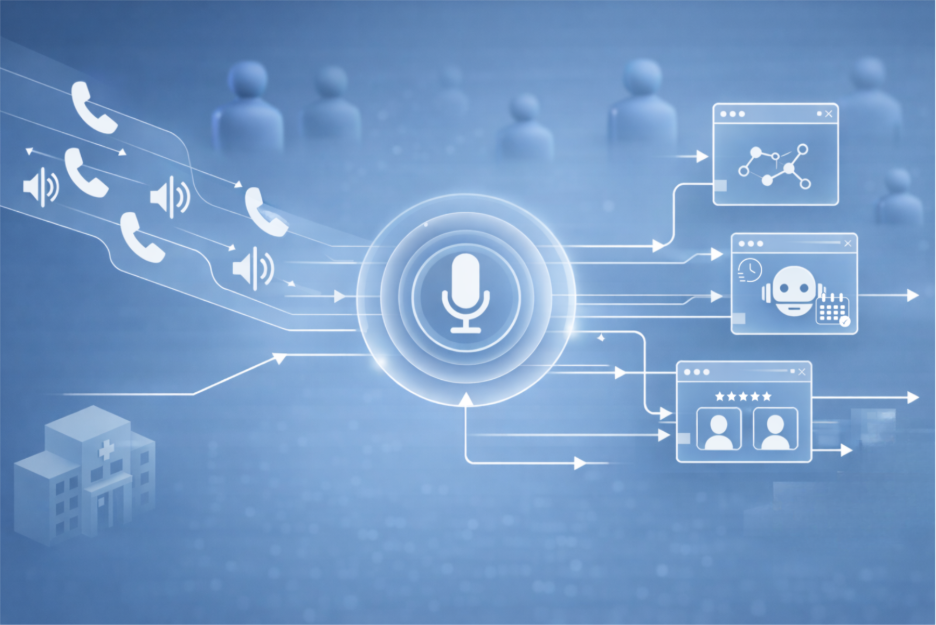
Understanding what AI voice assistant capability in an enterprise context is means looking beyond consumer tools. Business-grade AI Voice assistants are designed to integrate with scheduling systems, CRMs, and internal workflows.
Typical capabilities include:
These assistants function as frontline communication tools, collecting information and guiding users while escalating complex cases to human teams when appropriate.
Traditional automated phone systems often described as a voice machine operate on fixed menus and limited inputs. AI Voice systems, by contrast, interpret natural language and respond dynamically.
This distinction matters because user expectations have evolved. People expect intuitive, human-like interactions. Organizations relying solely on outdated systems risk frustration and disengagement, while AI Voice provides a smoother, more accessible experience.
AI Voice adoption is accelerating because it addresses real operational challenges. It improves response times, reduces administrative workload, and ensures consistent communication across channels.
As language understanding continues to improve, AI Voice is shifting from an efficiency solution to a strategic capability. It allows organizations to scale communication without sacrificing quality an advantage for healthcare and B2B environments facing growing demand and limited resources.
Successful AI Voice adoption requires thoughtful integration with existing workflows, attention to data security, and ongoing optimization. The goal is not to eliminate human interaction, but to support it, allowing teams to focus on relationship-driven work while AI manages routine conversations.
Understanding what is AI voice is the first step toward modernizing how your organization communicates. As AI Voice technology continues to mature, it offers a practical, scalable path to improving efficiency, accessibility, and user experience particularly in high-volume, service-driven environments.
If you’re exploring how AI Voice or conversational AI could support your organization’s communication strategy, schedule a consultation with North Vista Marketing to evaluate solutions aligned with your operational goals and growth plans.
.jpg)