.jpg)
What Is ROI in Healthcare? How to Measure Marketing Performance and Drive Growth
Read More





In today’s crowded digital world, simply marketing your product or service isn’t enough. Audiences crave connection, authenticity, and value beyond the sale. That’s where marketing and engagement intersect, a powerful combination that turns awareness into loyalty and customers into advocates.
When done right, engagement doesn’t just amplify your marketing; it humanizes it. It transforms one-way promotion into two-way relationships that drive real business results.
Let’s explore what marketing and engagement mean individually, how they connect, and how you can use both to build deeper, more meaningful relationships with your audience.
Marketing is the art and science of connecting a brand’s value to the right audience. It involves understanding customer needs, creating compelling messages, and guiding people through the journey from awareness to action.
Traditionally, marketing focused on exposure: running ads, broadcasting messages, and persuading people to buy. But today’s consumers are smarter and more empowered than ever. They don’t just want to be sold to, they want to be understood.
Modern marketing has evolved from being product-centered to people-centered. It’s not just about promoting what you offer; it’s about communicating why it matters, and doing so in a way that resonates emotionally with your audience.
Engagement goes beyond visibility. It’s the measure of how emotionally or behaviorally connected your audience is to your brand.
Engagement can take many forms:
While marketing gets attention, engagement builds relationships. It’s what keeps your brand top-of-mind long after the first click.
The connection between marketing and engagement defines modern brand success. Marketing introduces your message to the world; engagement keeps the conversation going.
Think of it this way:
Brands that focus on both don’t just attract customers; they create communities. Every touchpoint, from social media comments to post-purchase follow-ups, becomes an opportunity to deepen trust and strengthen loyalty.
Engagement turns passive audiences into active participants. When people interact with your content, contribute ideas, or share experiences, they begin to see themselves as part of your story. And that’s where long-term brand growth begins.
People remember stories more than sales pitches. Share narratives about your brand journey, customers, and real-life impact. Storytelling gives meaning to your message and helps audiences connect emotionally.
Data-driven personalization can dramatically boost engagement. Tailor your emails, offers, and content based on customer behavior, preferences, and past interactions. When your audience feels seen and understood, they respond.
Engagement thrives on participation. Add polls, surveys, comments, and interactive posts to your campaigns. Ask for opinions, celebrate customer milestones, and respond to feedback in real time.
Consistency builds familiarity, and familiarity builds trust. Stay active across channels (email, social, web) with a clear, authentic tone that reflects your brand personality.
Offer tips, insights, or helpful resources that solve real problems for your audience. When people learn something useful from your content, they engage more and develop positive associations with your brand.
The true power of marketing and engagement lies in how they support one another. Marketing creates awareness and brings new people into your orbit. Engagement deepens that connection, turning awareness into loyalty.
Here’s how they work hand in hand:
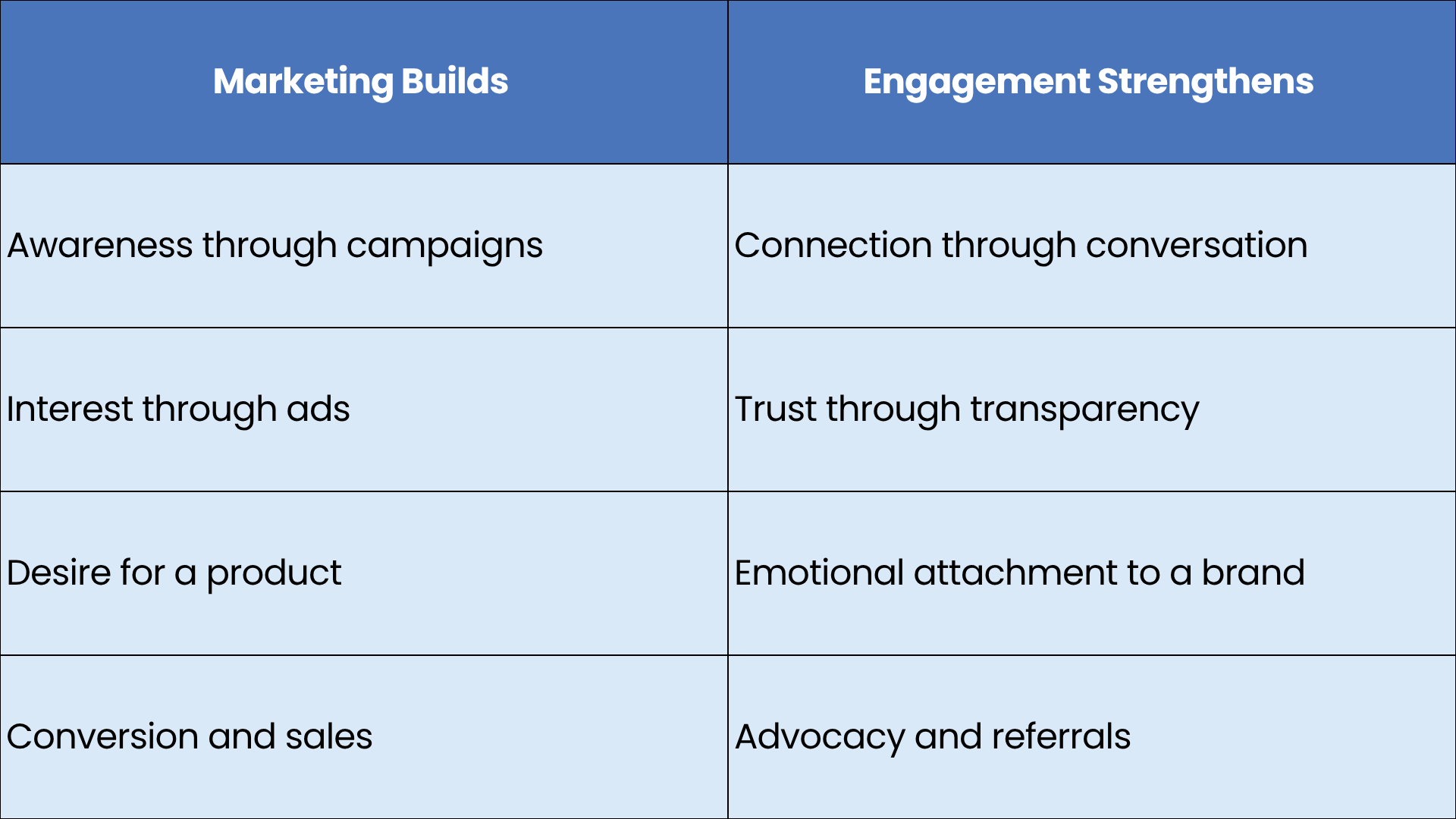
Together, they create a continuous cycle of attraction, retention, and growth.
You can’t improve what you don’t measure. Key metrics to track include:
The best marketing strategies balance numbers and narratives—tracking what works while maintaining the human element that drives those results.
Marketing focuses on attracting and converting customers. Engagement focuses on connecting and retaining them. Together, they create a complete customer relationship lifecycle.
Engagement transforms marketing from a one-time transaction into an ongoing relationship. It builds loyalty, improves retention, and increases the lifetime value of every customer.
Be authentic, respond quickly to feedback, personalize your communication, and provide consistent value. Engagement grows when your audience feels genuinely heard and appreciated.
Examples include social media interactions, customer feedback forms, personalized email campaigns, loyalty programs, and community events that bring your audience together.
Short-term, yes. But long-term success depends on engagement. Without it, marketing efforts become transactional, and customers quickly move on to competitors who make them feel valued.
In the modern digital landscape, marketing and engagement are inseparable. Marketing gets you noticed; engagement earns you trust. One drives traffic; the other builds relationships that last.
If you want real growth, don’t just market, connect. Build conversations, inspire participation, and create meaningful experiences that your audience wants to return to.
Ready to strengthen your marketing and engagement strategy? Our team helps brands create authentic connections that turn audiences into loyal customers. Book your appointment with us today and start building engagement that truly drives results.
.jpg)